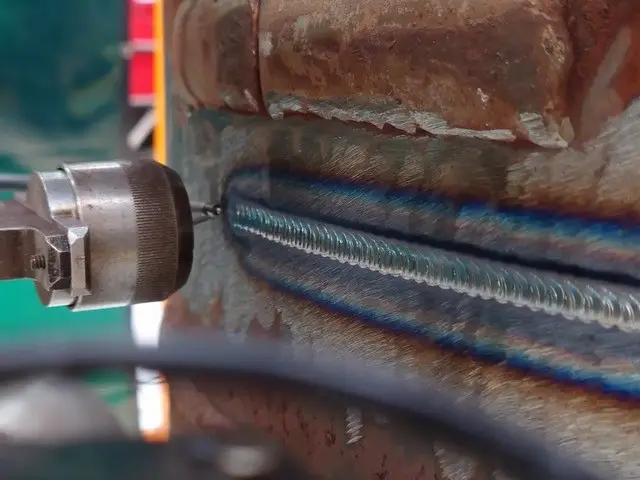
When researching orbital welding equipment, three names consistently appear at the top of search results and technical discussions: AMI, Polysoude, and Swagelok. Each brand has built a strong reputation within high-precision industries, which is why they are among the most researched orbital welding brands worldwide. However, while they are often grouped together, their systems are designed with different applications, priorities, and operating environments in mind.
This guide serves as a practical comparison of orbital welding brands. Focusing on where each typically excels, the types of applications they are used for, and the factors that matter most when choosing an orbital welding system. Rather than ranking one brand as “best”, we share our decades-worth of knowledge to help you understand the key differences, so you can make a more informed decision based on your process requirements, industry standards, and long-term production goals.
Key Takeaways
- AMI, Polysoude, and Swagelok are the most researched orbital welding brands because they are proven in high-precision, repeatable welding applications across regulated industries.
- There is no single “best” orbital welding brand. The right choice depends on your application, industry requirements, production volume, and level of automation required.
- Application fit matters more than brand reputation alone. Tube vs pipe welding, material type, and purity requirements should guide system selection.
- Industry standards and compliance play a key role when comparing orbital welding systems, particularly in pharmaceutical, food & beverage, and semiconductor applications.
- Software control, operator training, and long-term support are just as important as the welding head or power source when choosing an orbital welding system.
- Both new and used orbital welding systems can be suitable for critical applications, provided they are correctly specified, tested, and supported.
- Taking time to compare orbital welding brands at a high level helps reduce risk and ensures the system you choose aligns with long-term production goals.
Contents
- Why These Are the Most Researched Orbital Welding Brands
- Key Factors to Consider When Comparing Orbital Welding Brands
- High-Level Comparison of AMI, Polysoude, and Swagelok
- Strengths and Limitations of Each Orbital Welding Brand
- Which Orbital Welding Brand Is Right for Your Application?
- New vs. Used Orbital Welding Systems – What to Consider
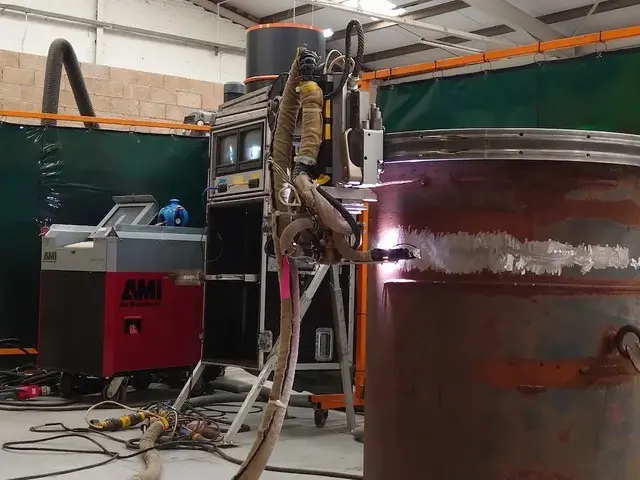
Why These Are the Most Researched Orbital Welding Brands
AMI, Polysoude, and Swagelok are widely regarded as the most researched orbital welding brands because they’re proven in applications where weld quality, repeatability, and process control are critical. They are frequently referenced by engineers and procurement teams comparing orbital welding systems for regulated and high-precision environments.
Rather than being driven by brand recognition, interest in these manufacturers is largely shaped by their long-term use in demanding orbital welding applications and their ability to meet strict industry standards.
Industry Adoption and Proven Use Cases
These brands are associated with industries where consistency and documentation are essential, including pharmaceutical and biotechnology manufacturing, food and beverage processing, semiconductor production, and high-purity pipework.
In these environments, orbital welding is utilised to reduce variability, improve repeatability, and support validation requirements. This is why buyers researching orbital welding equipment frequently encounter AMI, Polysoude, and Swagelok early in the comparison process.
—
Consistency, Repeatability, and Weld Quality
A key reason these manufacturers are prominently featured in orbital welding brand comparisons is their commitment to controlled, repeatable welding processes. Orbital welding systems are typically selected where manual welding introduces too much variation, particularly in tube and pipe fabrication involving thin-wall materials or tight tolerances.
The most researched orbital welding brands place strong emphasis on stable heat input, consistent travel speed, and predictable weld profiles. These factors are critical when weld quality and repeatability directly affect product integrity and compliance.
—
Global Support, Training, and System Longevity
Buyers also consider long-term factors such as training, service support, and expected system lifespan when choosing an orbital welding system. Orbital welding equipment is often a long-term investment, remaining in service for many years across multiple production cycles.
AMI, Polysoude, and Swagelok are frequently researched because their systems are known to be supported globally, with established training and servicing. This long-term reliability keeps them at the centre of research and evaluation when organisations are comparing orbital welding brands for ongoing production use.
Key Factors to Consider When Comparing Orbital Welding Brands
When conducting an orbital welding brand comparison, the most important factors are not the brand name itself, but how well a system aligns with your application, industry requirements, and long-term production goals. Understanding these differences helps narrow options before moving into detailed specification or supplier discussions.
Application Type – Tube vs Pipe Welding
One of the first considerations when comparing orbital welding brands is whether your primary application involves tube welding or pipe welding. While both use orbital processes, differences in wall thickness, joint preparation, and tolerances can influence system suitability.
Orbital welding for tube and pipe fabrication often requires different levels of control, head design, and clamping, making application fit a key factor when choosing an orbital welding system.
For example, Polysoude’s experience in producing exceptional solutions for precision work with tight tolerances lends itself well to tube welding. Although renowned for premium systems in all aspects of orbital welding, AMI’s wide range of solutions for pipe welding makes it a standout choice in this area.
—
Industry Requirements and Compliance
Industry standards play a major role in selecting an orbital welding machine, particularly in regulated environments. Sectors such as pharmaceutical manufacturing, food and beverage processing, and semiconductor production often require validated processes, documented parameters, and consistent weld quality.
When comparing orbital welding brands, it is important to consider how well a system supports compliance, traceability, and repeatability within your specific industry.
—
Power Control, Software, and Automation Levels
Another critical factor in orbital welding systems comparison is the level of control offered by the power source and software. This includes how welding parameters are set, monitored, and repeated across production runs.
Differences in automation, data logging, and programmability can significantly affect productivity and process stability, particularly in high-volume or quality-critical applications.
—
Training, Ease of Use, and Operator Skill Level
Ease of use is often overlooked during early research, but it has a direct impact on consistency and long-term performance. Orbital welding systems vary in their ease of use, as well as the level of training required to achieve reliable results.
When choosing an orbital welding system, buyers should consider operator experience, training availability, and ease of integration into existing workshop processes.
—
Long-Term Support and System Flexibility
Finally, long-term considerations like service support, availability of consumables, and system flexibility should not be underestimated. Orbital welding equipment is typically used across multiple projects and applications over its lifespan, and although these are Global brands, some may have a stronger service offering in your area than others.
Comparing orbital welding brands at this stage helps ensure the system selected can adapt to future requirements, rather than being limited to a narrow range of applications.
→ Explore our full guide to orbital welding
High-Level Comparison of AMI, Polysoude and Swagelok
When engineers and procurement teams compare orbital welding brands, the goal is usually to understand where each system is most commonly applied, rather than to identify a single “best” option. AMI, Polysoude, and Swagelok are all established manufacturers, but their orbital welding systems are typically selected for different production environments and priorities.
This high-level comparison focuses on typical use cases and application fit, helping narrow options before moving into detailed specifications.
—
Where AMI Orbital Welding Systems Are Typically Used
AMI orbital welding systems are often associated with applications that require flexibility across a wide range of tube and pipe sizes. They are commonly referenced in research for industries where repeatable welding is required, but production environments may vary or change over time.
AMI systems are frequently considered in situations where adaptability, process control, and operator familiarity are important factors in orbital welding equipment selection.
→ Learn more about AMI orbital welding systems
Ami models 207 and 227 orbital power sources and 9 series weld heads have been around for years, and have proven to be one of the best in the world for orbital tube-to-tube welding. Welders always want AMI (which is now ESAB), as they are consistently chosen to be the machine to do the job. Downside is lead times on equipment, consumables and parts can sometimes be long.
Craig Westerman, Sales Director at Westermans International
Typical Applications for Polysoude Orbital Welding Equipment
Polysoude orbital welding equipment is widely recognised for use in highly controlled and regulated environments. It is commonly researched by organisations operating in industries where weld consistency, documentation and process validation are critical.
As a result, Polysoude systems often appear in orbital welding brand comparisons for pharmaceutical, food and beverage, nuclear and high-purity applications.
→ Explore Polysoude orbital welding equipment
Polysoude’s P3, P4, and P6 are very nice power sources. Again, easy to programme with the P3 and P4 using mainly closed heads, and the P6 compatible with both open and closed heads, with or without wire feed. Polysoude tends to be favoured for fully auto welding systems, rather than orbital welders, but is a great contender to compete against both Swagelok and AMI. Particularly if using their new range of weld heads, like the UHP-625 (which looks very similar to the Swagelok 5 series head). Or their proven range of MW weld heads, like the MW-40, MW-65 AND MW-115.
Craig Westerman, Sales Director at Westermans International
Common Use Cases for Swagelok Orbital Welding Systems
Swagelok orbital welding systems are typically researched in relation to integrated tube fitting and fluid system installations. They are often associated with applications where system compatibility, repeatability and installation quality are key considerations.
In orbital welding system comparisons, Swagelok is frequently referenced for projects where consistency across tubing assemblies and installation standards is a priority.
→ View Swagelok orbital welding systems
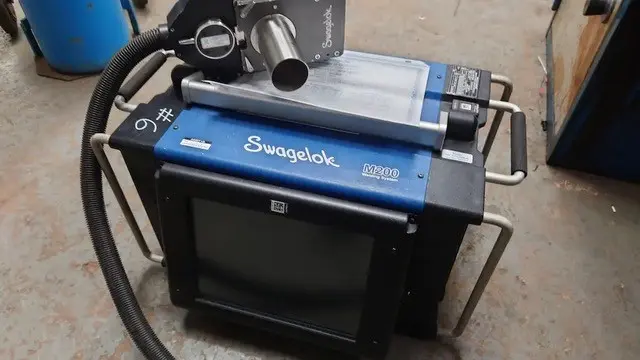
Swagelok’s M200 power source is in high demand, even the M100 that is superseded by the M200 is still a popular machine, mainly for their ease of programming. When supplied with series 4 or 5 weld heads, it’s one of the most popular machines on the market for small tube work (2mm – 17mm with the Series 4 or 5 head). Although not in as much demand, there are also options for heads like the series 10 or 20, for bigger diameters. Again, downside with Swagelok being such a great machine is that delivery times for new can be long.
Craig Westerman, Sales Director at Westermans
How to Use This Comparison
At this stage of the research process, the aim is not to select a specific machine, but to understand which orbital welding brands are most aligned with your application type, industry standards, and production approach.
Using a high-level comparison helps focus further evaluation and ensures that detailed specification discussions are based on application fit rather than brand familiarity alone.
→ View all of our orbital welding equipment
All the above setups in their own right are being used in Aerospace, Brewery, Food, Dairy Beverage, Pharmaceutical, Biotechnology, Medical, Semiconductor and Purity environments, to name just a few.
There is no set rule on what power source to use, a lot is down to the welder’s own preference, with all the above having been proven over many years of orbital welding in many industries. We’ve created this guide to give you some initial direction in your search for an orbital welding machine.Craig Westerman, Sales Director
The table below provides a high-level comparison of AMI, Polysoude and Swagelok, focusing on typical applications and decision factors rather than technical specifications.
| Comparison Factor | AMI | Polysoude | Swagelok |
| Typical Applications | Flexible tube and pipe welding across varied production environments | High-purity and regulated welding applications | Tubing systems and integrated fluid system installations |
| Associated Industries | General fabrication, pharmaceutical, biotech, energy | Pharmaceutical, food & beverage, nuclear, semiconductor | Process piping, instrumentation, fluid systems |
| Primary Focus | Adaptability and process control | Consistency, validation and repeatability | System compatibility and installation quality |
| Production Environment | Low to medium volume, mixed applications | Medium to high volume, tightly controlled environments | Installation-focused and standardised processes |
| Process Control Emphasis | Strong control with flexibility across applications | High level of control for repeatable, validated welds | Consistent results within defined system parameters |
| Research Drivers | Versatility and broad application range | Compliance, documentation and weld quality | Integration with tubing and fluid system standards |
| Typical Buyer Considerations | Application flexibility, operator familiarity | Compliance requirements, process stability | System consistency and installation standards |
Strengths and Limitations of Each Orbital Welding Brand
When comparing orbital welding brands, understanding both strengths and limitations helps avoid selection based purely on reputation. While AMI, Polysoude and Swagelok are all well-established manufacturers, each is typically better suited to certain applications, production environments and operational priorities.
This section highlights common considerations rather than technical specifications. Helping buyers assess overall suitability before progressing to detailed system evaluation.
—
Situations Where Each Brand Excels
- AMI – AMI orbital welding systems are often valued for their adaptability across different tube and pipe welding applications. They are chosen in environments where production requirements may change, or where a single system is expected to cover a broad range of work.
- Polysoude – Polysoude systems are associated with highly controlled processes where consistency, documentation and repeatability are critical. They are often referenced in applications requiring validated welding procedures and strict compliance with industry standards.
- Swagelok – Swagelok orbital welding systems are typically considered where integration with tubing and fluid system installations is a key requirement. They are often selected for projects that prioritise consistency across assemblies and installation quality.
—
Potential Limitations Depending on Application
- AMI – In highly regulated or validation-heavy environments, additional consideration might be needed to ensure system configuration and documentation fully align with compliance requirements.
- Polysoude – For more varied or lower-volume fabrication environments, the level of process control and structure associated with Polysoude systems may exceed operational needs. In other words, they could be overkill.
- Swagelok – In applications needing broader flexibility beyond tubing-focused installations, alternative orbital welding systems may offer a wider range of configuration options.
—
Why Application Fit Matters More Than Brand Recognition
While brand reputation plays a role in early research, successful orbital welding system choice is driven by application fit. Factors such as material type, production volume, compliance requirements, and operator experience often have a greater impact on long-term performance than brand choice alone.
Taking a balanced approach to orbital welding brand comparison helps ensure the system selected supports both current and future production needs.
→ Read our guide to orbital welding applications & industries.
Which Orbital Welding Brand Is Right for Your Application?
There is no single orbital welding brand that suits every application. The right choice depends on industry requirements, production volume, and process control needs. Understanding how each system typically aligns with different environments helps narrow options before detailed specification or supplier discussions.
—
High-Purity and Critical Weld Environments – Polysoude
Best suited for: regulated industries requiring validated, repeatable welds.
In environments such as pharmaceutical manufacturing, biotechnology, food and beverage processing and semiconductor production, orbital welding systems are often selected for their ability to deliver consistent results and support documentation and compliance.
Brands typically researched for these applications prioritise process stability, repeatability and traceability, making application fit more important than flexibility alone.
—
High-Volume Production and Repeatability – AMI & Polysoude
Best suited for: applications where consistency across large quantities of welds is critical.
When production volumes increase, factors such as repeatable parameter control, ease of replication and long-term system stability become key. Orbital welding systems used in these environments are often selected for their ability to deliver consistent weld quality over extended production runs.
Buyers comparing orbital welding brands at this stage often focus on reducing variation and maintaining quality at scale.
—
Flexible, Multi-Industry Fabrication Shops – AMI
Best suited for: workshops handling a variety of materials, sizes and project types.
In mixed-use fabrication environments, flexibility is often a priority. Orbital welding systems that can adapt to different tube and pipe sizes and changing production requirements are commonly researched for these applications.
When choosing an orbital welding system for a multi-industry shop, adaptability and ease of reconfiguration are often key considerations.
—
Tubing and Fluid System Installations – Swagelok
Best suited for: projects focused on tubing assemblies and installation consistency.
For applications centred on tubing systems and fluid handling installations, orbital welding systems are often evaluated based on compatibility, repeatability and installation standards. Consistency across assemblies can be as important as individual weld quality.
In these cases, buyers frequently compare orbital welding brands with system integration and standardisation in mind.
—
Key Takeaway for System Selection
Choosing the right orbital welding system is about matching the system to the application, not selecting the most recognisable brand. Clarifying your production environment, industry requirements, and long-term goals makes it easier to progress from research into confident system evaluation.
→ Speak to one of the team about your application
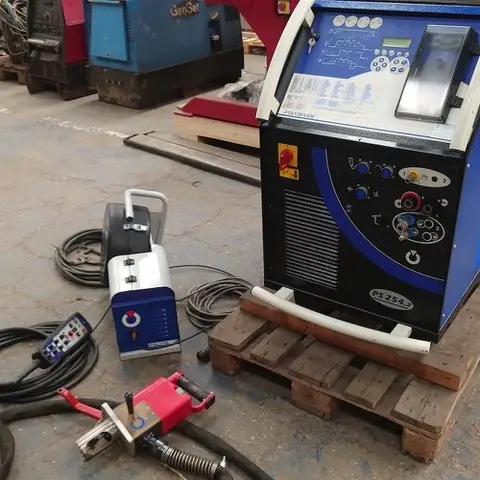
New vs Used Orbital Welding Systems – What to Consider
When choosing an orbital welding system, deciding between new and used equipment is often as important as choosing the right brand. Both options can be suitable for critical applications, provided the system is specified, tested, and fully supported.
—
When a New Orbital Welding System May Be the Right Choice
Best suited for: first-time orbital welding users, validation-heavy environments, bespoke specifications.
New orbital welding systems are often selected where processes must be configured from the outset to meet specific validation, documentation or automation requirements. Buyers may prioritise the latest software features, long-term standardisation and manufacturer-led configuration.
New systems are commonly considered in environments where process control and future scalability are central to production planning. Or where working with manufacturers to validate weld programmes, schedules, and train operators is key.
—
When a Used Orbital Welding System Can Be a Practical Option
Best suited for: cost-conscious projects, production increases or expansion, and shorter lead times.
Used orbital welding systems are frequently researched by buyers looking to reduce capital expenditure without compromising weld quality. When sourced correctly, used equipment can offer access to established orbital welding brands while remaining suitable for quality-critical applications.
The key factor is ensuring the system has been properly inspected, tested and supported before entering production. If you have the system knowledge and know the requirements you need from your next machine, a used orbital welder is an economical and project-conscious choice.
→ Browse available used orbital welding systems
—
Validation, Testing and Documentation
Regardless of whether a system is new or used, testing and performance guarantees are critical considerations. Orbital welding equipment used in regulated industries must demonstrate consistent performance and support repeatable welding parameters.
Buyers comparing orbital welding systems should confirm what inspection, testing and documentation are carried out before installation, particularly when compliance and traceability are required.
→ Learn how we test and inspect our welding equipment
—
Lead Times, Availability and Long-Term Support
Lead time and availability can significantly influence system selection, especially for time-sensitive projects. In some cases, used orbital welding systems can be deployed more quickly than new builds, while still meeting production requirements.
Long-term support, service availability and access to consumables should also be considered when evaluating both new and used options, as orbital welding systems are typically long-term investments.
—
Key Takeaway on New vs Used Systems
There is no universal rule for choosing between new and used orbital welding equipment. The right decision depends on application requirements, budget, lead times and support expectations. Evaluating both options as part of the research process helps ensure the selected system aligns with both immediate needs and long-term production goals.
Final Thoughts on Comparing Orbital Welding Brands
When comparing orbital welding brands, the most important takeaway is that application fit matters more than brand recognition. AMI, Polysoude and Swagelok are all widely researched because they are proven in high-precision environments. But each is typically selected for different production needs, industries and operating priorities.
Rather than looking for a single “best” option, effective system selection starts with understanding your welding application, compliance requirements and long-term production goals. Clarifying these factors early helps narrow choices and ensures that detailed specification and supplier discussions are focused and productive.
Taking a structured approach to orbital welding brand comparison, supported by high-level research before progressing into technical details, reduces risk, shortens decision cycles, and leads to more confident investment decisions.
—
Next Steps in Your Research
If you’re moving beyond initial research, the next step is usually to review system availability, configuration options and support considerations based on your application.
→ View all of our available orbital welding machines.
Need some advice after browsing? Get in touch with the team to discuss your needs in more detail.
