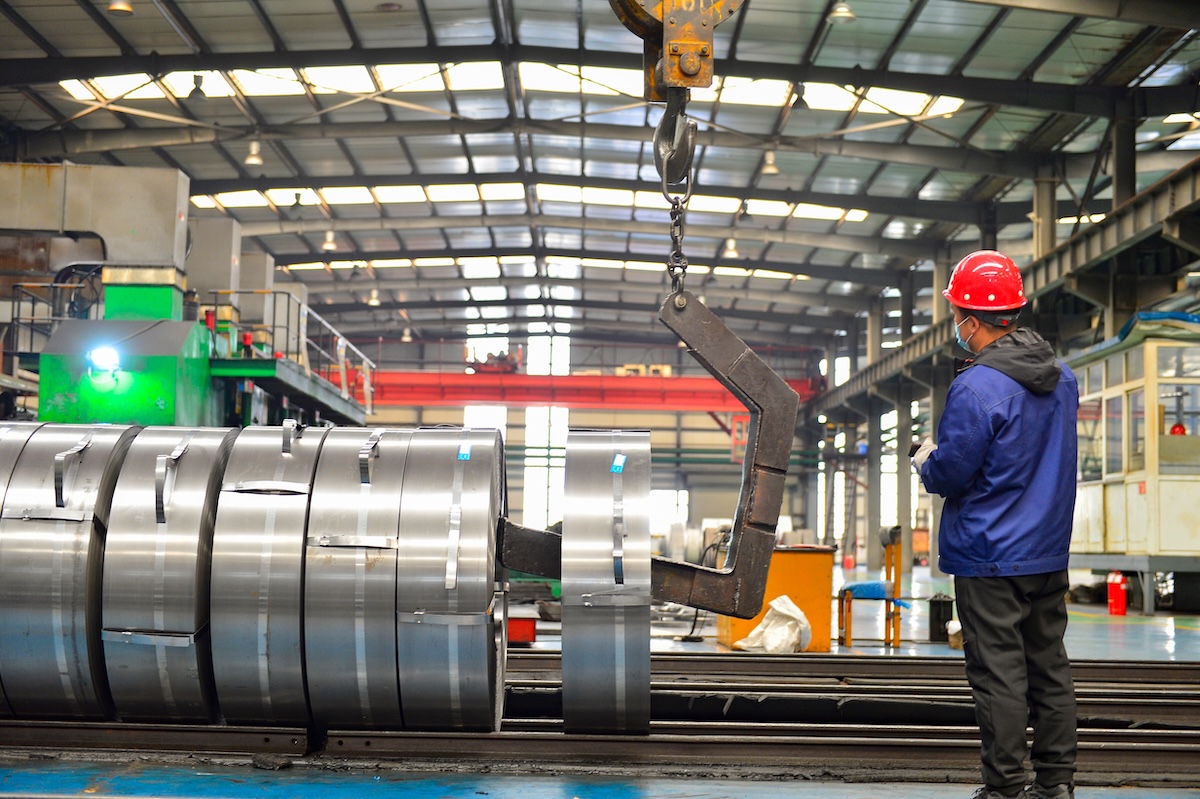
For directors of small and medium-sized manufacturing businesses, investing in welding and fabrication machinery is becoming a more higher-stakes decision than ever.
Around the world, businesses are under pressure from a growing number of challenges. Including skills shortages, rising operating costs, and the need to increase output without expanding headcount. Combine this with growth ambitions, and many SMBs are finding it increasingly difficult to balance between investing in new capabilities and managing financial risk.
In this context, choices about welding machines, plasma cutting systems, and machine tools have far-reaching implications. Cash flow, delivery performance, quality, and resilience are all affected, with downtime and inefficient equipment quietly eroding margins long before issues are recognised.
Despite the scale of these investments, directors are often forced to make machinery decisions using information that focuses on specifications rather than business outcomes. The questions that matter most at the highest level (risk, return, scalability, and speed to productivity) are rarely addressed upfront.
Before comparing brands or models, directors need a clear framework for decision-making. Asking the right questions early can mean the difference between an equipment investment that supports growth, and one that becomes an expensive constraint on the business.
Key Takeaways for Directors
- Investments in welding and fabrication machinery are a commercial decision, not just a technical one. The right equipment affects cash flow, risk exposure, productivity, and long-term competitiveness.
- Skills shortages and rising costs are pushing SMBs to rethink how work gets done.
Many directors are investing in equipment to increase output and consistency without increasing headcount. - Downtime, rework, and bottlenecks can quietly erode margins. Ageing or unsuitable equipment increases risk, often costing more than the machine itself.
- The purchase price rarely reflects the true cost of ownership.
Energy use, maintenance, consumables, training, and lost production time all affect ROI. - New vs used machinery is a strategic choice, not simply a budget decision.
Reliability, warranty, lead times, and speed to productivity often matter more than age. - The best investments start with the right questions — not brand comparisons.
Directors who define the problem clearly are far more likely to make confident, future-proof decisions.
Contents
- Why Investing in Welding & Fabrication Machinery Is a Strategic Decision
- Productivity Pressure: Increasing Output Without Hiring More Staff
- Downtime Risk: How Ageing Equipment Quietly Erodes Margins
- Growth vs Risk: Choosing Equipment That Supports Long-Term Plans
- Understanding Total Cost of Ownership Beyond the Purchase Price
- New vs Used Machinery: Making a Strategic Investment Choice
- Speed to Production: Why Lead Times and Support Matter
- Key Questions Every Director Should Ask Before Investing
- Key Takeaways for Directors
1. Why Investing in Welding & Fabrication Machinery Is a Strategic Decision
For many small and medium-sized manufacturers, welding and fabrication machinery represents one of the largest capital investments the business will make, outside of people and premises. Yet more often than not, it’s approached as a technical upgrade rather than a strategic business decision.
In reality, equipment choices have a direct impact on key areas like profitability, operational risk, and growth capacity. Welding machines, plasma cutters, and machine tools impact the reliability of work delivered. As well as how dependent the business is on skilled labour, and the workshop’s resilience to disruption.
Across the UK manufacturing sector, directors are operating in an environment shaped by skills shortages, rising operating costs, and increasing pressure to do more with fewer resources. These pressures mean that machinery investment is no longer about replacing like-for-like equipment; it’s about protecting margins and enabling sustainable growth.
MHA’s 2025 manufacturing report cited the top three challenges faced by their 1000 manufacturing business owner participants were:
- tax increases
- tech evolution
- cyber security
Pointing to an increase in concern over cost and investment.
Machinery Decisions Affect More Than Output
While output and speed are often the most visible drivers for equipment upgrades, the wider implications are just as important at director-level.
Poorly matched or ageing machinery can lead to:
- Increased downtime and unplanned maintenance
- Higher rework and scrap rates
- Greater reliance on a small number of skilled operators
- Missed delivery deadlines and strained customer relationships
Conversely, the right equipment can:
- Improve consistency and repeatability
- Reduce operator dependency
- Stabilise production schedules
- Support higher-value or more complex work
These outcomes directly influence cash flow predictability and customer confidence, not just workshop efficiency.
“We often get enquiries for specific machines, but I’ll often stress how important it is that you know the machine will do the job, and it’s not just because you watched a good YouTube review.”
— Craig Westerman, Sales Director at Westermans
Investment Timing Matters as Much as Specification
Another challenge directors face is when to invest. Delaying replacement or upgrades can feel like a way to reduce risk, but ageing or unsuitable equipment often creates hidden costs that only become visible once problems escalate.
The “It will do for now” stance is ok if something is only used occasionally, but if something went wrong unexpectedly, what impact would it have on your business?
Unplanned downtime, rushed repairs, overtime, or outsourced work can quietly erode margins. Making the eventual investment more expensive than it needed to be.
At the same time, investing too early or in the wrong capability can tie up capital and limit flexibility.
This is why the most effective machinery investments are guided by business objectives first, rather than specifications or brand preferences.
We wrote an article to help with this decision, read it here.
A Director’s View: Framing the Decision Correctly
From a director’s perspective, welding and fabrication machinery should be evaluated in terms of:
- Risk reduction
- Return on investment
- Scalability
- Speed to productivity
- Long-term support and reliability
Approaching the decision this way helps ensure that the equipment supports the wider business, not just the immediate production requirement.
Before comparing brands, models, or prices, directors benefit from taking a step back and asking the right strategic questions. Those questions form the foundation of a confident, future-proof investment decision.
“Our happiest customers are clear on the problem they’re solving before they even look at a specification sheet.”
— Craig Westerman, Sales Director at Westermans
2. Productivity Pressure: Increasing Output Without Hiring More Staff
For many directors, one of the biggest constraints on growth is no longer demand, it’s capacity.
Across global manufacturing, skills shortages continue to limit the amount of work businesses can realistically take on. Experienced welders, machine operators, and fabrication specialists are increasingly difficult to recruit, and when they can be found, labour costs are rising. As a result, many SMB manufacturers are being forced to ask a difficult question: how do we increase output without increasing headcount?
In the UK alone, it’s reported that 97% of manufacturers say that hiring and retaining skilled labour is a huge challenge for business growth.
Read the full report from The Manufacturer
When Labour Becomes the Bottleneck
In workshops reliant on manual or labour-intensive processes, productivity can often only grow when headcount increases. This creates a fragile operating model, where output depends heavily on:
- A small number of highly skilled individuals
- Overtime and shift extensions
- Short-term workarounds to meet delivery deadlines
Over time, this approach increases risk. Absences, staff turnover, or skills gaps can quickly lead to missed deadlines, inconsistent quality, or rejected work. All of which put pressure on margins and customer relationships.
For directors, the issue is rarely about replacing people. It’s about reducing dependency on scarce skills and making output more predictable.
“We speak to a lot of directors who aren’t short of orders; they’re short of skilled manpower. They’ve hit a wall where the challenge is producing more, without stretching people or quality.”
– Craig Westerman
How Equipment Investment Changes the Productivity Equation
Modern welding and fabrication machinery can shift productivity from being labour-limited to process-led.
Depending on the application, this may include:
- Welding equipment that improves consistency and reduces operator fatigue
- Plasma cutting systems that increase cutting speed and accuracy
- Machine tools that reduce manual handling and setup time
The key benefit is not just faster output, but repeatability. This enables consistent results across operators and shifts.
Our client, Ken Simpson at Responsive Engineering, achieved just that with a submerged arc welding system:
“The ESAB submerged arc welding system, combined with a Bode column and boom manipulator, has enabled us to carry out high deposition rate welding during the latter part of jetty construction sections. Increasing our skill levels in the process whilst rapidly recouping its initial cost.”
insert productivity chart
Productivity Without Compromising Quality
A common concern among directors is whether increasing output will compromise quality. In practice, the opposite is often true.
Equipment that standardises processes can:
- Reduce variation between operators
- Improve weld consistency and cut accuracy
- Lower rework and scrap rates
- Support higher-value or more demanding contracts
This is particularly relevant in sectors where quality, traceability, or repeatability are critical, and where reputational damage from failures is costly.
If you’re considering incorporating automation into your welding or fabrication processes, our guide “Welding Automation: Boost Your Productivity and Eliminate Re-work” is a great place to start.
A Director’s Perspective: Scaling Output Responsibly
From a director’s viewpoint, productivity gains must be sustainable. Chasing output through overtime or short-term fixes may work temporarily, but it rarely supports long-term growth.
Equipment investment, when aligned with business goals, allows directors to:
- Increase capacity without proportional labour costs
- Reduce operational risk linked to skills shortages
- Plan growth with greater confidence
This is why many SMB manufacturers are reassessing how work is done, not just how much work is done!
Before investing, directors would benefit from understanding whether new machinery will genuinely reduce labour dependency and improve throughput. Or simply move the bottleneck elsewhere.
“You will make the most difference to your bottom line when you’re in control of production processes and decisions. Relying on external sources in critical areas like sheet metal cutting, for example, puts you at the mercy of costs and timelines you have no control over. ”
— Craig Westerman, Sales Director.
3. Downtime Risk: How Ageing Equipment Quietly Erodes Margins
For many SMB fabricators and manufacturers, downtime is viewed as an operational inconvenience rather than a strategic risk. In reality, it is often one of the most expensive and least visible drains on profitability.
As welding, plasma cutting, and machine tools age, the likelihood of unplanned stoppages increases. Breakdowns rarely arrive at convenient times (as we all know!), they tend to occur mid-job, under delivery pressure, or when skilled staff are already stretched. For directors, the real cost is not just the repair, but the knock-on effects across the business.
According to L2L, a leading manufacturing intelligence platform based in the US, facilities on average lose around 30 hours of production per month to downtime. Adding up to around 360 hours per year!
Read their report to learn the true cost of these unscheduled stoppages.
The Hidden Cost of “Keeping It Running”
Many directors delay equipment replacement because machines still appear to be functioning. However, ageing equipment often introduces hidden inefficiencies long before it fails completely.
These can include:
- Increasing frequency of minor stoppages
- Longer setup and changeover times
- Reduced consistency and higher rework rates
- Greater reliance on reactive maintenance
Over time, these issues become normalised within the workshop. Often absorbed through overtime, workarounds, or external subcontracting, making the true cost difficult to quantify.
“A lot of owners and directors don’t realise how much downtime they’re absorbing until they actually look at the amount of unplanned repairs or outsourcing over say the last year.”
— Mark Reaney, Technical Director at Westermans
Downtime Is a Commercial Risk, Not Just a Maintenance Issue
From a director’s perspective, downtime affects far more than output.
Unplanned stoppages can:
- Disrupt delivery schedules and damage customer confidence
- Increase overtime and temporary labour costs
- Delay invoicing and impact cash flow
- Put pressure on quality as teams rush to recover lost time
In sectors where reliability and consistency are critical, repeated downtime can quietly undermine long-term customer relationships. Even if individual incidents appear minor in isolation.
Predictability Matters More Than Perfection
Most of our clients are rarely looking for zero downtime; they’re looking for predictable operations.
Modern or properly serviced equipment can significantly reduce variability by:
- Improving reliability under continuous use
- Shortening recovery times when issues occur
- Providing clearer maintenance schedules and support
This predictability means directors can plan capacity, staffing, and delivery commitments with greater confidence. Reducing operational stresses that often accompany growth.
A Director’s View: When Downtime Becomes a Trigger for Investment
For many SMBs, investment decisions are triggered not by ambition, but by disruption. A critical breakdown, missed delivery, or lost contract often becomes the moment when equipment risk is reassessed.
However, waiting until failure forces decisions to be made under pressure. Limiting options and increasing cost.
Those who proactively evaluate downtime risk are better positioned to:
- Plan investment on their own terms
- Compare new and used equipment options objectively
- Minimise disruption to ongoing operations
This is why downtime should be viewed as a strategic indicator, not just a maintenance problem.
4. Growth Ambition vs Investment Risk: Choosing Equipment That Supports the Business
For many directors, the decision to invest in welding and fabrication machinery sits at the intersection of ambition and caution.
On one hand, there is a clear desire to grow; to take on higher-value work, improve margins, or increase capacity. On the other hand, there is understandable concern about committing capital in an uncertain market. This tension often leads to delayed decisions or incremental upgrades that fail to address the underlying constraint.
Growth Often Exposes Equipment Limitations
Many SMB manufacturers only recognise equipment constraints once growth is already underway.
Common triggers include:
- Winning larger or longer-term contracts
- Being asked to meet tighter tolerances or quality standards
- Increased order volume exposing bottlenecks
- Greater scrutiny on delivery reliability
At this stage, machinery that was previously “good enough” can quickly become a limiting factor. Forcing directors to choose between turning work away and stretching existing resources beyond their limits.
“We often see customers outgrow their equipment faster than they expected, especially when order volumes increase, or quality requirements tighten.”
— Craig Westerman, Sales Director at Westermans
The Risk of Investing for Today Only
One of the most common mistakes directors make is investing solely to solve an immediate problem, without considering how the business might evolve.
Equipment selected to meet today’s workload may struggle to:
- Support higher volumes or additional shifts
- Handle new materials, thicknesses, or processes
- Integrate with future automation or workflow changes
This can result in reinvestment sooner than planned, tying up capital and limiting flexibility.
From a strategic perspective, the risk is not spending too much, but spending in a way that restricts future options.
Balancing Flexibility, Capability, and Cost
The most effective machinery investments balance three competing priorities:
- Capability: Can the machine reliably meet current technical requirements?
- Flexibility: Can it adapt to changes in work volumes or specifications?
- Cost control: Does the investment protect cash flow and ROI?
This balance looks different for every business. But directors who evaluate equipment against medium-term goals rather than immediate pressure tend to make more resilient decisions.
If you’re unsure as to whether new or used equipment would be best for your next machinery investment, take a look at our guide.
Growth Without Overcommitting Capital
Growth-focused investment does not always mean buying the newest or most complex equipment available.
In many cases, directors are looking for:
- Proven, reliable machinery with known performance
- Faster routes to production
- Lower capital exposure while maintaining capability
This is why considerations around equipment lifecycle, upgrade paths, and resale value matter just as much as headline specifications.
A Director’s View: De-Risking Growth Decisions
From a board-level perspective, machinery investment should reduce uncertainty, not increase it.
Directors who take a structured approach to growth-led investment are better able to:
- Align equipment capability with business strategy
- Protect cash flow during expansion
- Avoid reactive purchases under pressure
By framing equipment decisions around growth scenarios rather than just current demand, owners and directors can make investments that support the business, both now and in the years ahead.
80% of manufacturers plan to spend at least 20% or more of their improvement budgets on smart manufacturing solutions.
Source: Deloitte 2025 survey of 600 manufacturers.
5. Understanding Total Cost of Ownership Beyond the Purchase Price
For directors, one of the most common and costly mistakes when investing in new fabrication machinery is focusing too heavily on the purchase price.
While the upfront cost is easy to compare, it rarely reflects the true financial impact of a machine over its working life. In practice, welding equipment, plasma cutting systems, and machine tools generate ongoing costs that can significantly influence profitability long after the initial investment is made.
What Makes Up the Total Cost of Ownership?
Total cost of ownership (TCO) equates to all costs associated with owning and operating a machine. Not just buying it.
For most fabrication companies, this typically includes:
- Energy consumption
- Consumables and tooling
- Planned maintenance and servicing
- Unplanned repairs and downtime
- Operator training and onboarding
- Lost production during breakdowns or changeovers
Individually, these costs may appear manageable. Collectively, they often outweigh differences in initial purchase price.
Energy, Consumables, and Running Costs Add Up
As energy and material costs remain volatile, operating efficiency has become a board-level concern.
Factors that can erode margins in the background over time include:
- Consume more power than necessary
- Require frequent consumable changes
- Produce inconsistent results leading to rework
Particularly felt in high-throughput or multi-shift environments.
Understanding how equipment performs under real operating conditions is often more important than headline specifications.
“Machines with similar purchase prices perform very differently once energy use, consumables, and uptime are factored in. A machine that might be cost-effective for one business might not have the same efficiency for another.”
— Craig Westerman, Sales Director at Westermans
Downtime and Maintenance as Financial Variables
Maintenance strategy has a direct impact on cost predictability.
Reactive maintenance may keep machines running in the short term, but it often leads to:
- Higher repair costs
- Longer downtime when failures occur
- Increased disruption to production schedules
In contrast, planned maintenance and equipment that supports readily available parts allows directors to forecast costs more accurately and reduce operational risk.
Again, if you haven’t already, see our top tips for extending the life of your machinery in our guide.
Training and Ease of Use Matter More Than Expected
The amount of training required is another frequently underestimated cost.
Complex or unintuitive equipment can:
- Extend onboarding for new operators
- Increase dependency on specific individuals
- Raise the risk of misuse or inconsistent output
For SMBs already facing skills shortages, machines that are easier to operate and standardise can deliver faster returns. Even if the initial purchase price is higher.
“We often get enquiries from people looking for help with training and operation of machinery they’ve purchased elsewhere. They’ve had it for a while, but can’t work out how to set the machine up for the job they’re doing. We’re happy to help where we can, but sometimes weeks have gone by and it’s had no use since delivery.”
– Mark Reaney, Technical Director at Westermans
Why Cheaper Can Be More Expensive Long-Term
From a director’s perspective, the risk is not choosing the most expensive option; it’s choosing the option that looks cheaper but costs more to operate.
Machines with lower upfront prices may:
- Break down more frequently
- Lack long-term support or spare parts
- Deliver inconsistent output
When these factors are considered, the apparent savings often disappear!
This is backed up by Manufacturing Technology Insights Europe, read their article Transforming ROI Outcomes Through Data and Information Flow Strategy.
A Director’s View: Making Cost Predictable
Ultimately, directors are not trying to eliminate cost; they’re trying to make it predictable.
Understanding the total cost of ownership allows businesses to:
- Compare options on a like-for-like basis
- Protect cash flow over time
- Avoid unpleasant surprises post-installation
This perspective also leads to the conversation of new versus used equipment, where warranty, testing, reliability, and support play a central role.
- Strong internal linking potential to:
- Used equipment pages
- Refurbishment and testing content
- Warranty and after-sales support pages
6. New vs Used Machinery: Making a Strategic Investment Choice
For many directors and CEOs, the decision between new and used welding or fabrication machinery is often framed as a budget discussion. In reality, it is a risk, timing, and return-on-investment decision.
Both options can make sense, but only when evaluated against the business’s operational needs, growth plans, and tolerance for risk. It would be a mistake to assume that “new” automatically means lower risk, or that “used” means compromise.
When New Machinery Makes Sense
New equipment can be the right choice when the business requires:
- Highly specific or bespoke capability
- The latest process control or automation features
- Long-term standardisation across multiple sites
- Manufacturer-backed lifecycle support from day one
For businesses planning major step-changes in capability or entering new markets, new machinery can provide clarity and consistency. Provided lead times, commissioning, and training requirements are fully understood.
However, these benefits must be weighed against:
- Higher upfront capital commitment
- Longer lead times before production
- Potential learning curves for operators
- Service availability in your location
Why Used Machinery Is Increasingly a Strategic Option
Used or refurbished machinery is no longer the “second-best” option it once was. For many SMB manufacturers, it offers a compelling balance between performance, cost control, and speed.
When properly selected, tested, and supported, used equipment can:
- Enter production far more quickly
- Reduce capital exposure
- Deliver proven performance in real-world scenarios
- Free up cash for other growth priorities
This is particularly attractive for directors operating in uncertain markets, where flexibility and cash flow protection matter.
“Many of our customers choose used equipment not only to save money, but to reduce risk, test process solutions, and start producing faster”
— Craig Westerman, Sales Director at Westermans
The Risk Is Not Age — It’s Uncertainty
From a director’s perspective, the biggest risk is not whether a machine is new or used. It’s whether its performance and reliability are predictable.
Key factors that reduce risk include:
- Full inspection and functional testing prior to delivery
- Availability of spare parts
- Warranty and after-sales support
- Supplier expertise and transparency
Used equipment without these safeguards can introduce uncertainty. With them, it can offer greater confidence than new equipment still waiting to be commissioned.
Speed to Productivity Often Tips the Balance
For many directors, the deciding factor is not price; it’s how quickly the machine starts generating value.
Delays caused by long lead times, installation complexity, and training requirements can materially affect cash flow and delivery commitments.
In contrast, readily available, fully tested used machinery can often be deployed far more quickly. Reducing disruption and accelerating return on investment.
A Director’s View: Choosing Based on Business Fit
The most effective decisions are made when both new and used options are evaluated against business objectives. Not just assumptions.
Directors should consider:
- What level of reliability is required today?
- How flexible does the equipment need to be in 3–5 years?
- How much capital can realistically be committed without constraining growth?
When viewed this way, the decision becomes less about preference and more about strategic fit.
For a full breakdown of how to decide between new and used machines, read our helpful article.
7. Speed to Production: Why Lead Times and Support Matter More Than Ever
For directors, the real value of welding and fabrication machinery is only realised when the machine is producing reliably on the workshop floor.
In a market shaped by skills shortages, tight delivery schedules, and cash-flow sensitivity, speed to production has become a critical factor in investment decisions. Long lead times, delayed commissioning, or extended training periods can significantly reduce the return on even the most capable equipment.
Lead Time Is a Commercial Risk, Not a Technical Detail
Lead times are often treated as an operational footnote, but for owners, directors, and CEOs, they carry real commercial consequences.
Extended lead times can:
- Delay the ability to fulfil new or increased orders
- Push revenue generation further into the future
- Increase reliance on overtime or sub-contracting
- Add pressure to already stretched teams
In fast-moving or contract-driven environments, these delays can mean missed opportunities or strained customer relationships.
netstock.com reports that lead times can fluctuate by 50-200% from original quoted estimates. Leading to significant production line shutdowns and emergency procurement costs of 200 – 500%.
Commissioning and Training Often Determine ROI
Even once equipment is delivered, productivity gains are not guaranteed.
Commissioning delays, incomplete setup, or extended training periods can slow adoption and reduce confidence on the shop floor. For SMBs with limited spare capacity, this disruption can be significant.
Equipment that is fully tested before delivery, arrives ready to integrate into existing processes, and comes with clear documentation and support is far more likely to reach productive output quickly. Leading to quicker justification and trust in the investment.
After-Sales Support Is Part of the Asset
From a director’s perspective, support doesn’t end when the order is delivered. A good supplier is one that can be relied on.
Availability of after-sales service makes the difference between a short disruption and a prolonged shutdown. These include:
- Responsive technical support
- Spare parts and servicing
- Clear escalation paths when issues arise
This is particularly important for SMBs without large in-house maintenance teams.
We supply warranty and life-time after-sales support Worldwide, find out more.
Predictable Ramp-Up Builds Confidence Across the Business
When new equipment is implemented smoothly, the benefits extend beyond the workshop.
Predictable ramp-up:
- Reduces operational stress
- Improves planning accuracy
- Builds confidence among operators and customers
- Allows directors to commit to delivery schedules with greater certainty
This predictability is often more valuable than marginal gains in specification or performance.
A Director’s View: Speed Is a Strategic Advantage
For directors balancing growth, risk, and cash flow, speed to production should always consider reducing exposure.
Investments that reach stable output quickly:
- Shorten the time to ROI
- Reduce disruption during transition
- Allow the business to respond faster to demand
This is why lead times, commissioning, and after-sales support should be considered alongside cost, capability, and flexibility. Not as an afterthought when the decision has already been made.
“If the need for new equipment arises in our business, I always make it a priority that research is made into available warranties and support availability. The last thing anyone needs is to be firefighting in what is an already competitive landscape.”
— Claire Spillane, Financial Director at Westermans International
Learn how we helped Shenyang Welding Equipment in China with their need for AMI orbital welders. Reducing the lead time by half compared to new equivalents!
7. Key Questions Every Director Should Ask Before Investing
Before comparing brands, specifications, or prices, you’ll benefit from taking a step back and asking some commercially focused questions. These questions help frame the investment in terms of risk, return, and long-term business impact, rather than short-term technical needs.
We’ve outlined some examples below, or you can download our printable checklist version.
What Problem Are We Actually Trying to Solve?
Is the investment driven by:
- Capacity constraints?
- Skills shortages?
- Downtime and reliability issues?
- Quality or compliance requirements?
Being clear on the underlying problem reduces the risk of buying equipment that addresses the symptom rather than the cause.
How Will This Equipment Reduce Risk or Improve Predictability?
Owners and Directors should consider whether the machine will:
- Reduce reliance on scarce skills
- Improve consistency and repeatability
- Lower the likelihood of unplanned downtime
- Stabilise delivery schedules
If the investment does not meaningfully reduce operational risk, its value may be limited.
What Is the True Total Cost Over Its Working Life?
Beyond the purchase price:
- What are the expected energy and consumable costs?
- How will maintenance and servicing be handled?
- What downtime risk remains?
- How quickly will the machine start generating return?
This perspective allows for fair, like-for-like comparisons between options.
How Quickly Can the Equipment Be Productive?
Speed to production is often critical.
- What are the lead times?
- How long will installation and commissioning take?
- What training is required?
- How disruptive will the transition be?
For many SMBs, time lost before production directly affects cash flow and customer commitments.
Does This Investment Support Our Medium-Term Growth Plans?
Directors should assess whether the equipment:
- Scales with increased order volume
- Supports new materials, tolerances, or processes
- Fits the business’s 3–5 year trajectory
Equipment that only solves today’s problem may become tomorrow’s headache!
New or Used: Which Option Best Fits Our Risk Profile?
Rather than defaulting to preference, directors should ask:
- Which option offers the most predictable performance?
- How important is speed to deployment?
- How much capital can we commit without limiting flexibility?
- What warranty, testing, and support are in place?
This reframes the decision as strategic, not just financial.
What Support Will We Have After the Sale?
Long-term value depends on:
- Technical support availability
- Access to parts and servicing
- Clear escalation paths when issues arise
From a director’s perspective, after-sales support is part of the asset, not an optional extra.
Are We Making This Decision Proactively or Under Pressure?
Finally, directors should reflect on timing:
- Are we investing to enable growth?
- Or reacting to a breakdown or missed delivery?
Proactive decisions are typically more cost-effective, flexible, and aligned with long-term strategy.
A Director’s Summary
The most effective machinery investments start with clarity.
Directors who define the problem, understand the risks, and evaluate options against business goals are far more likely to make confident, future-proof decisions.
Download the printable checklist version here.
Conclusion: Start With Clarity, Not Specifications
For directors of small and medium-sized manufacturing businesses, investing in welding and fabrication machinery is no longer a simple purchasing decision. It’s a strategic choice that affects risk, cash flow, productivity, and the ability to grow with confidence.
As skills shortages persist and operating pressures increase, the most successful investments aren’t driven by specifications or brand preference, but by a clear understanding of the problem being solved. Whether your challenge is capacity, downtime, quality, or scalability, the right equipment purchase starts with asking the right questions. Evaluating options through a commercial lens.
By taking a structured approach and considering factors like total cost of ownership, speed to production, and long-term support, directors can avoid reactive decisions. Making investments that improve predictability rather than add complexity. In many cases, this clarity is what turns machinery investment from a necessary expense into a genuine enabler of sustainable growth.
⸻
Need a simple way to pressure-test your next machinery investment?
Download our Director’s Checklist for Investing in Welding & Fabrication Machinery, or speak with our team to talk through your options.
